
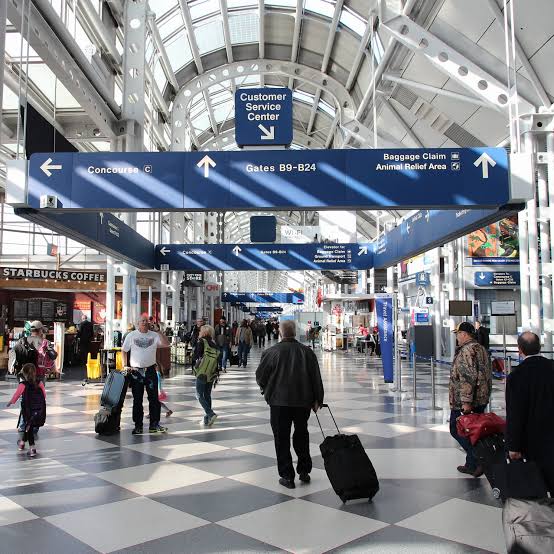
Chicago O’Hare Flight Delays: FAA Disruptions Leave Travelers Facing Major Delays.
Chicago O’Hare Flight Delays: FAA Disruptions Leave Travelers Facing Major Delays
Chicago O’Hare International Airport (ORD) is facing continued flight disruptions after severe thunderstorms triggered FAA ground stops and caused a major backlog of flights across the airport.
Travelers flying through Chicago O’Hare are being warned to check their flight status before heading to the airport as weather-related disruptions continue to affect operations.
FAA Ground Stops Disrupt O’Hare Flights
Severe thunderstorms moved through the Chicago area on Sunday, August 9, forcing the Federal Aviation Administration (FAA) to issue a ground stop at O’Hare.
The first ground stop began shortly before noon Central Time and lasted for more than three hours. During the restriction, inbound aircraft were held at their departure airports while the FAA managed air traffic around Chicago.
Although the ground stop was eventually lifted, the disruption continued as aircraft, crews and passengers became caught in a growing backlog.
A second round of storms later in the day added to the delays, extending the disruption into overnight operations.
O’Hare Among the World’s Most Delayed Airports
The scale of the disruption was significant.
According to FlightAware data cited in recent reporting, O’Hare recorded 1,312 delays, 148 canceled departures and 124 canceled arrivals on August 9, making it the most delayed airport in the world that day.
The disruption also affected major airlines operating at O’Hare. United Airlines, which has a particularly large presence at the airport, recorded more than 1,000 delays during the disruption period.
Why Are O’Hare Delays Getting Worse?
Weather was the immediate trigger, but O’Hare was already operating under significant capacity pressure.
The FAA warned earlier this year that scheduled operations at O’Hare were exceeding the airport’s manageable capacity. The agency said peak-day schedules had exceeded 3,080 daily operations, compared with roughly 2,680 during the previous summer.
The FAA subsequently moved to limit operations during the busy summer travel season in an effort to reduce congestion, delays and cancellations.
That means severe weather can have a much larger impact when an airport is already operating close to its limits.
More Flight Disruptions Possible
Travelers should remain alert for additional delays as thunderstorms and heavy rainfall continue to threaten parts of the Chicago region.
Weather-related restrictions can affect not only flights departing from O’Hare but also aircraft arriving from other cities. When aircraft and crews are delayed at one airport, those delays can spread throughout an airline’s network.
Passengers connecting through Chicago may therefore experience delays even if their original departure airport has clear weather.
What O’Hare Travelers Should Do
Passengers scheduled to fly through O’Hare should:
- Check their airline’s flight status before leaving for the airport.
- Monitor the FAA’s National Airspace System status for active restrictions.
- Allow additional time for airport and ground operations.
- Check for airline travel waivers if their flight is affected.
- Avoid relying solely on an earlier scheduled departure time because delays can change quickly.
The FAA’s National Airspace System Status page provides information about major air traffic restrictions and ground stops.
Bottom Line
Chicago O’Hare’s latest flight disruption shows how quickly severe weather can create a nationwide ripple effect at one of America’s busiest aviation hubs.
The immediate cause of the latest delays was severe weather and FAA traffic restrictions, while O’Hare’s high traffic volume and complex airline networks contributed to the size of the resulting backlog.
Travelers flying through O’Hare should check their flight status frequently before leaving for the airport, particularly during periods of severe weather.